The definition
Table d’hôte is a set meal of several courses served at one fixed price, with little or no choice within each course.
In practice, English-speaking menus use table d’hôte and prix fixe for nearly the same thing. When a difference is drawn, table d’hôte leans toward the set meal the house serves everyone that day, and prix fixe toward one price with a choice in each course.
How you hear it
“The carte” in that answer is the à la carte menu, where everything is priced on its own.
Where it shows up on the menu or the check
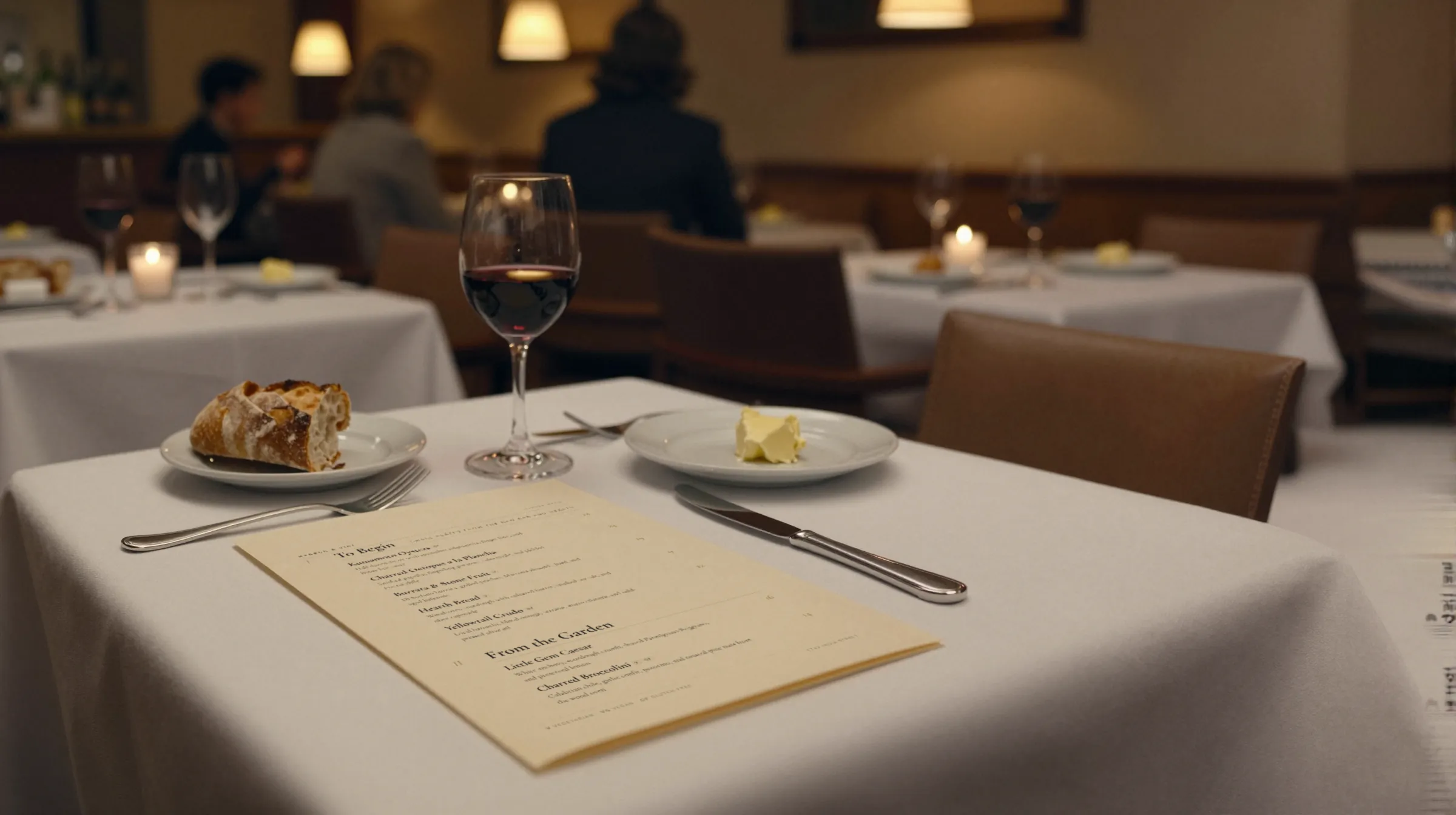
A table d’hôte menu names the courses in order with one price at the top or the bottom: “Table d’hôte, 42” and three or four lines under it. If there is a choice, it is two options at most per course.
Hotels and French-leaning restaurants often print it on a card inside the main menu or as a separate sheet dated for the day, since it changes more often than the à la carte menu.
On the check, the whole meal is one line per guest at the set price, with any supplement added for that guest.
What it means for prices and printing
The set price has to cover the most expensive path through the meal. If one course has a costly option, price it as a supplement rather than raising the price for everyone.
In Gaslamp, a table d’hôte is one item at the per-person price with the courses written in its description, or a section named for it with the dinner line first and each course below it. Gaslamp needs a price of at least $1 on every line, so courses listed as their own lines carry their à la carte price, and the note under the heading says they are included in the set price.
Where it comes from
The Online Etymology Dictionary gives the French table d’hôte, literally “table of the host”: the common table where a hotel or inn served its guests a shared meal. The à la carte entry in the same dictionary contrasts the two.
Go deeper: Prix fixe and tasting menus