The definition
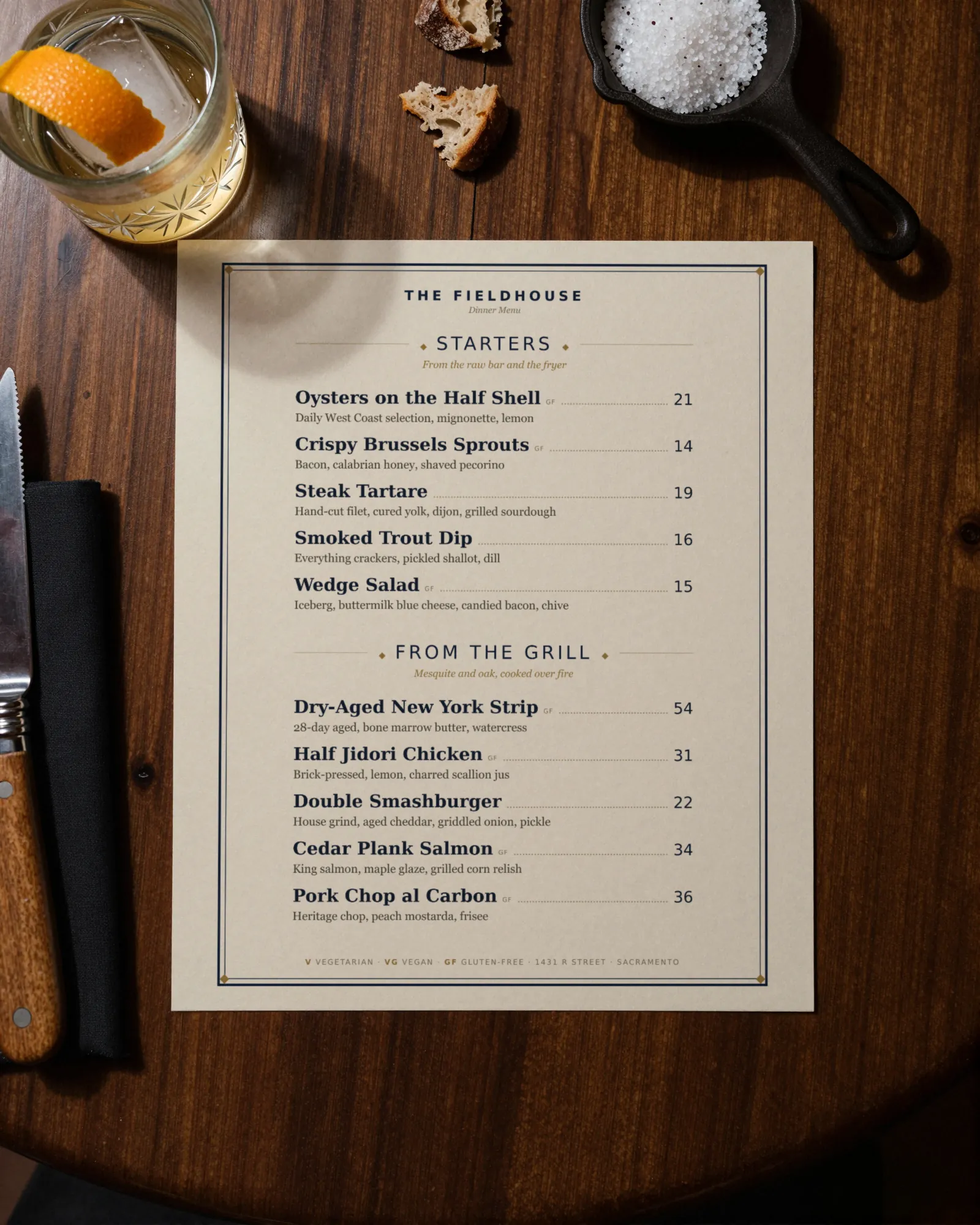
À la carte means each dish on the menu is ordered and priced separately, rather than bundled into a set meal at one price.
Most everyday restaurant menus are à la carte even when they never say so. The phrase earns its place on a menu when a guest might assume something is included: a steak without potatoes, a main without a side, a tasting room where the bottles are sold apart from the flight.
How you hear it
Steakhouses print “sides à la carte” so the server does not have to explain it at every table.
Where it shows up on the menu or the check
On a menu, “à la carte” usually appears once, in the note under a heading: “All steaks à la carte” or “Sides à la carte, sized to share.” Printing it on every line is clutter.
On restaurants that run both, it marks the everyday menu against the set one: “Available à la carte or as part of the three-course menu.” In that case each dish carries its own price and the set menu carries one price per guest.
On the check, à la carte simply means one line per item ordered, each at its menu price.
What it means for prices and printing
Selling sides à la carte lets the main’s price stay lower on the page, and it makes the check higher when the table shares. That only works if guests know before they order; a guest who expected potatoes with the steak remembers the surprise more than the steak.
If most guests order the same side with a dish, consider including it and raising the main’s price instead. Our menu pricing strategy guide covers how to price from plate cost.
In Gaslamp, every item is à la carte by default: each line carries its own price, or up to three labeled prices for sizes. Put the à la carte rule in the note under the section heading, which prints on the PDF and shows on the hosted menu.
Where it comes from
The Online Etymology Dictionary dates “à la carte” in English to 1826, from French, literally “by the card”: ordered by separate items from the bill of fare, as opposed to a meal at a table d’hôte at one inclusive price.
Go deeper: Prix fixe and tasting menus, the other way to sell a meal