The date and the clock
The fall equinox in 2026 was Tuesday, September 22. That is the calendar’s date. The kitchen’s date comes from the produce: the week the tomatoes and stone fruit stop being worth serving and the squash, apples, and mushrooms are good. For many kitchens that lands between mid September and mid October, which means that if you have not changed over yet, you are in the window now.
The fall menu has no booking date driving it, so it slips. Set a changeover day on the calendar anyway, a weekday morning with a quiet lunch after it, and work back from that.
The one decision: how much to change. A full rewrite every season is a lot of costing, training, and printing. A partial change of three to six dishes is often enough. Decide which dishes are the menu (the ones regulars order) and which are the season, and only change the season.
Timeline: six weeks out to the morning after
These are the fall-specific steps. Costing, recipe cards, allergens, and every place the menu lives are in the seasonal menu changeover checklist.
| When | Kitchen | Bar | Front of house | The menu |
|---|---|---|---|---|
| Six weeks out (mid August) | List the summer dishes that go and the fall ones that come. | Retire the spritzes; draft a warm or brown-spirit drink. | Note which summer dishes regulars ask for. | Add a hidden Fall section for the new dishes. |
| Four weeks out | Test the new dishes. Ask suppliers when squash and apples are reliable. | Test the drinks. | Taste with the floor. | Write the new lines. |
| Two weeks out | Re-cost the dishes you keep, not only the new ones. | Re-cost the list. | Train on the new dishes. | Move the prices that moved. |
| Changeover morning | Last summer dishes used up at family meal. | New drinks on. | Pre-shift on every change. | Show the Fall section, hide the summer dishes, print. |
| The week after | Watch which new dish the kitchen struggles with. | Watch what sells. | Listen for “where did the peach salad go.” | Fix what the first week taught you. |
What to serve
Structure a fall menu by what the season changes, not by a theme:
- Starters. A squash soup or a roasted squash plate replaces the tomato salad. A salad of bitter greens, apple or pear, and a nut replaces the stone fruit one.
- Mains. One braise joins the grill: short rib, pork shoulder, a chicken thigh dish with mushrooms. It holds, which helps a kitchen whose summer menu was all à la minute.
- Sides. Roots and brassicas: carrots, parsnips, Brussels sprouts, cauliflower.
- Dessert. Apple or pear, and warm spice. One chocolate dish stays year round.
- Drinks. A brown-spirit cocktail, a cider, and for a café a spiced latte.
Fall also changes the allergens on the menu. Summer salads rarely carry nuts; fall ones often do, in candied pecans, toasted walnuts, and hazelnut brown butter. Warm-spice drinks bring dairy and sometimes nut milks. Every new dish goes through an allergen check before it is printed, and the tags on the menu should follow: a fall salad that was tagged nut-free in August is not nut-free in October. Gaslamp’s dietary tags (vegetarian, vegan, gluten-free, dairy-free, nut-free, and the rest) sit on each item and print on the PDF, so change the tag in the same edit as the dish.
What to 86 early: the last summer dishes, before the product turns, not after. Run the last of the tomatoes as a special for a week and let it go. What to keep off: a squash dish in every section. One or two is a season; five is a theme.
Cafés feel fall in the drink list first. See menu software for cafés for how a seasonal drink section is kept hidden between launches.
Pricing: a worked example
The fall changeover is also a repricing. This worked example uses made-up costs; it is not a benchmark.
| Dish | Cost in spring | Cost now | Old price | New price |
|---|---|---|---|---|
| Roast chicken | $6.10 | $6.70 | $26 | $28 |
| Burger | $4.80 | $5.30 | $18 | $20 |
| Caesar | $2.40 | $2.45 | $14 | $14 |
In this example the chicken’s cost rose about 10 percent ($6.10 to $6.70), so its price moves about 10 percent too, $26 to $28.60, rounded down to $28. The burger’s cost rose about 10 percent and moves from $18 to $20. The Caesar barely moved and stays. Moving each price by its own cost, not the whole menu by one number, keeps the dishes that did not get dearer where they were. The menu price increase calculator does a whole list at once.
Print and QR plan
Print the full menu on changeover morning, once. A fall menu lives for two or three months, which is long enough that fresh paper is worth it. Print only after the pre-shift tasting, not before, because the first tasting always changes a description.
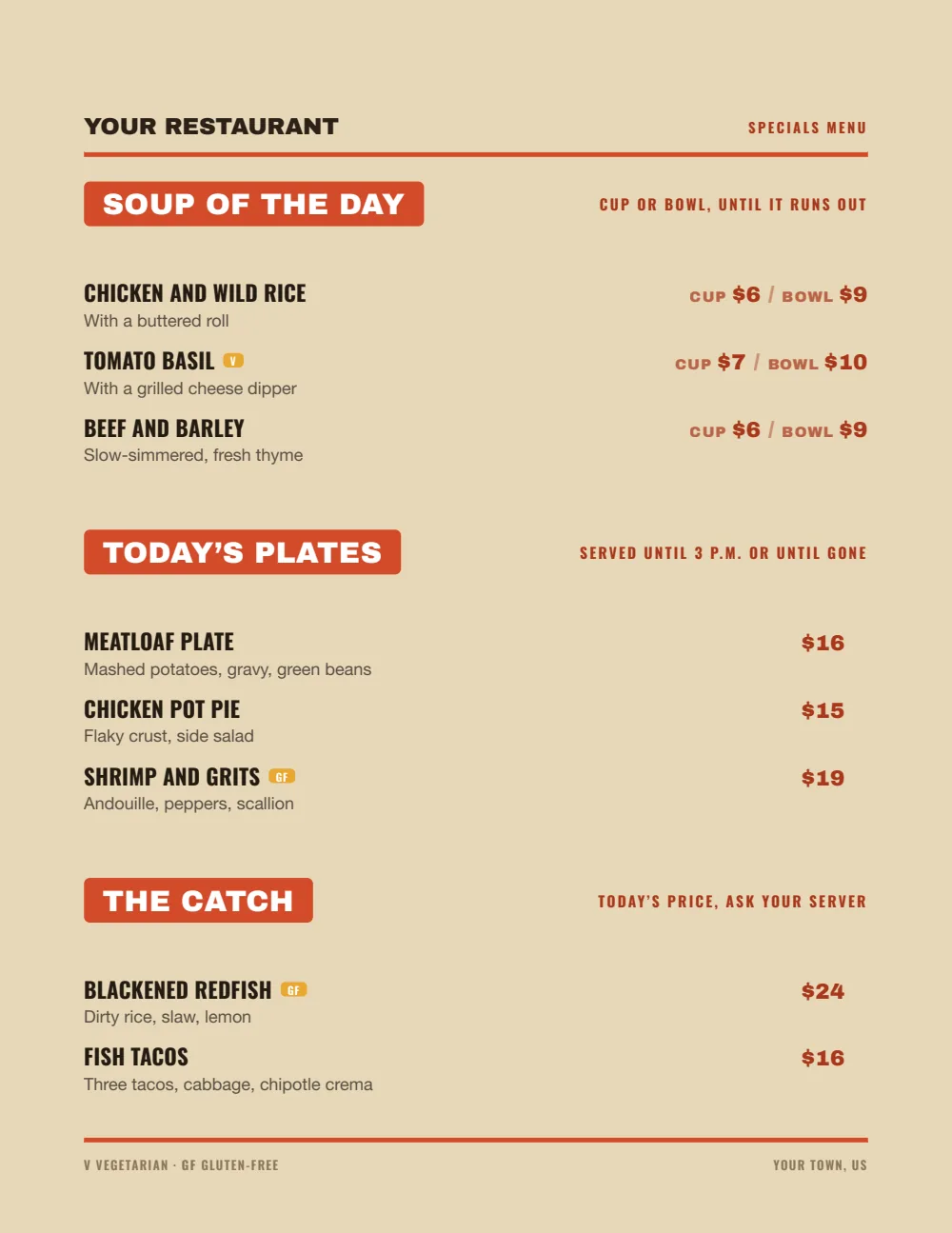
The QR code on the tables does not change at all. The new dishes were built ahead of time in a hidden section; on changeover morning you show it, hide the summer dishes, and save. Everyone who scans after that sees fall. If you run a short list of weekly specials on top, the specials board handles it.
What Gaslamp does not do
It does not change the menu on the equinox by itself; you show the new section and save. It does not cost your dishes or read your invoices, and it does not push new prices to your POS or to delivery apps. It needs a number on every line, so there is no “MP” line. It does keep the last 50 versions of the menu, so the summer menu is one restore away when the peaches come back.
Next on the calendar: Halloween, a Saturday this year.