The date and the clock
Halloween 2026 falls on Saturday, October 31. A Saturday Halloween is a different night from a Tuesday one: the parties that would have spread across the weekend land on one night, guests in costume come out later, and the bar is busier than the kitchen. Plan the specials around the bar.
Few guests book Halloween weeks ahead the way they book Thanksgiving, so the menu does not have to be public early. It has to be final when you order the product, about a week out, and on the tables by the Thursday before, so the weekend crowd sees it.
The one decision: how many specials. Two or three drinks and one or two plates is enough to make the night feel planned without adding a station. A long themed menu on a Saturday this busy slows the bar down, and a slow bar is the one thing guests remember.
Timeline: six weeks out to the morning after
These are the Halloween steps. For the full mechanics of changing a menu, use the seasonal menu changeover checklist; Halloween touches only a sliver of it.
| When | Kitchen | Bar | Front of house | The menu |
|---|---|---|---|---|
| Six weeks out (mid September) | Pick one or two shareable plates from existing prep. | Draft three cocktails: one batched, one built, one zero-proof. | Decide on a costume night, a contest, or neither. | Add a Halloween section, hidden. |
| Four weeks out | Cost the plates. | Test the drinks at speed, not just for taste. | Staff the night like a Saturday and a half. | Write the names and descriptions. |
| One week out | Order for the count. | Order spirits, garnish, and any dry ice or smoke gear. | Post the specials where regulars will see them. | Show the section. Print a specials card. |
| The night | Plates from prep, not from scratch. | Batch the punch in advance; build only one drink to order. | Tell tables what is gone. | Hide each special the minute it runs out. |
| November 1 | Use up the leftovers on the Sunday menu. | Count what sold. | Clear the decorations. | Hide the section. Keep it for next year. |
What to serve
- A batched punch. Dark rum or mezcal, citrus, spice, served from a bowl or a dispenser. It pours in seconds and it is the drink people photograph.
- One built cocktail. Something with a smoked or dark garnish that the bar can make in under a minute.
- A zero-proof drink with the same care. Not a soda with a gummy worm. Price it like a drink.
- A shareable plate. Something from your fryer or your oven that already exists on the menu, renamed for the night.
- A dessert, if the kitchen is quiet. A pumpkin or dark chocolate dish that comes out of the walk-in ready to plate.
What to 86 early: the built cocktail with the special garnish, because the garnish is the thing you ordered too little of. What to keep off: anything that needs a food runner to explain it at a loud table, and anything with an ingredient guests cannot identify from the name. Spell the base spirit first in every cocktail description so a guest in a mask can order by pointing. For running specials the rest of the year, see the daily specials guide.
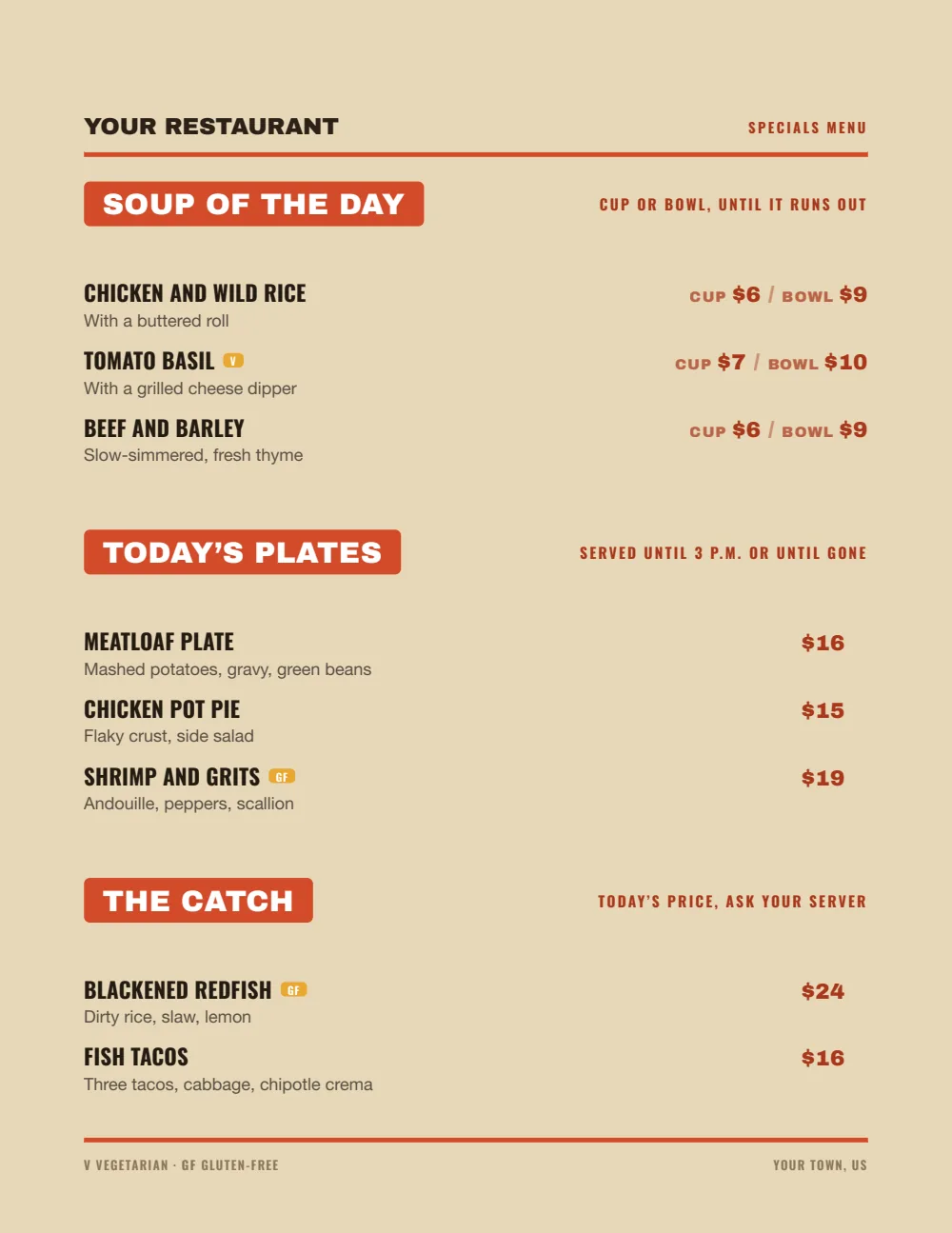
Write the specials so they read at a glance in a loud room. The format that works: the name, then the base, then one detail. For example, “The Cauldron: dark rum, spiced pear, lime” or “Black garlic wings: six, with smoked ranch.” A guest scanning the QR code in a dark bar should know in two seconds what is in the glass and roughly what it costs. Two lines of description is the most a Halloween special needs; the costume is doing the rest.
Pricing: a worked example
This is a worked example with made-up costs, to show the arithmetic for a batched punch. It is not a benchmark.
| Ingredient | Example cost |
|---|---|
| 1.5 oz dark rum | $1.35 |
| 0.75 oz spiced syrup | $0.18 |
| 0.75 oz lime | $0.30 |
| 2 oz tea and bitters, garnish | $0.27 |
| Cost per serving | $2.10 |
At an 18 percent target pour cost in this example, $2.10 ÷ 0.18 = $11.67, printed as $12. The zero-proof drink runs the same way from its own costs; in this example it lands at $8, which is a real drink price and says so. The menu item price calculator does the division for any cost and target you enter.
Print and QR plan
Do not reprint the menu for Halloween. Print a specials card for the table and the bar top, or write the specials on a board, and keep the everyday printed menu as it is. Print the card on the Thursday before, and print fewer than you think: one night, and drinks sell faster than cards get read.
On the QR: put the specials in a Halloween section at the top of your everyday menu and show it for the weekend. Everyone who scans the code they already use sees it. When the night is done, hide the section; the code never changed and never will.
What Gaslamp does not do
It does not show or hide the Halloween section on a timer; you do it Thursday and Sunday from your phone. It does not track drink counts or run a contest, and it does not talk to your POS, so the specials have to be rung in there too. If the punch sells by the glass and by the bowl, both prices share one line. And it does not check your state’s drink special rules for you.
Four weeks later is Thanksgiving, which is a real menu, with real lead time.