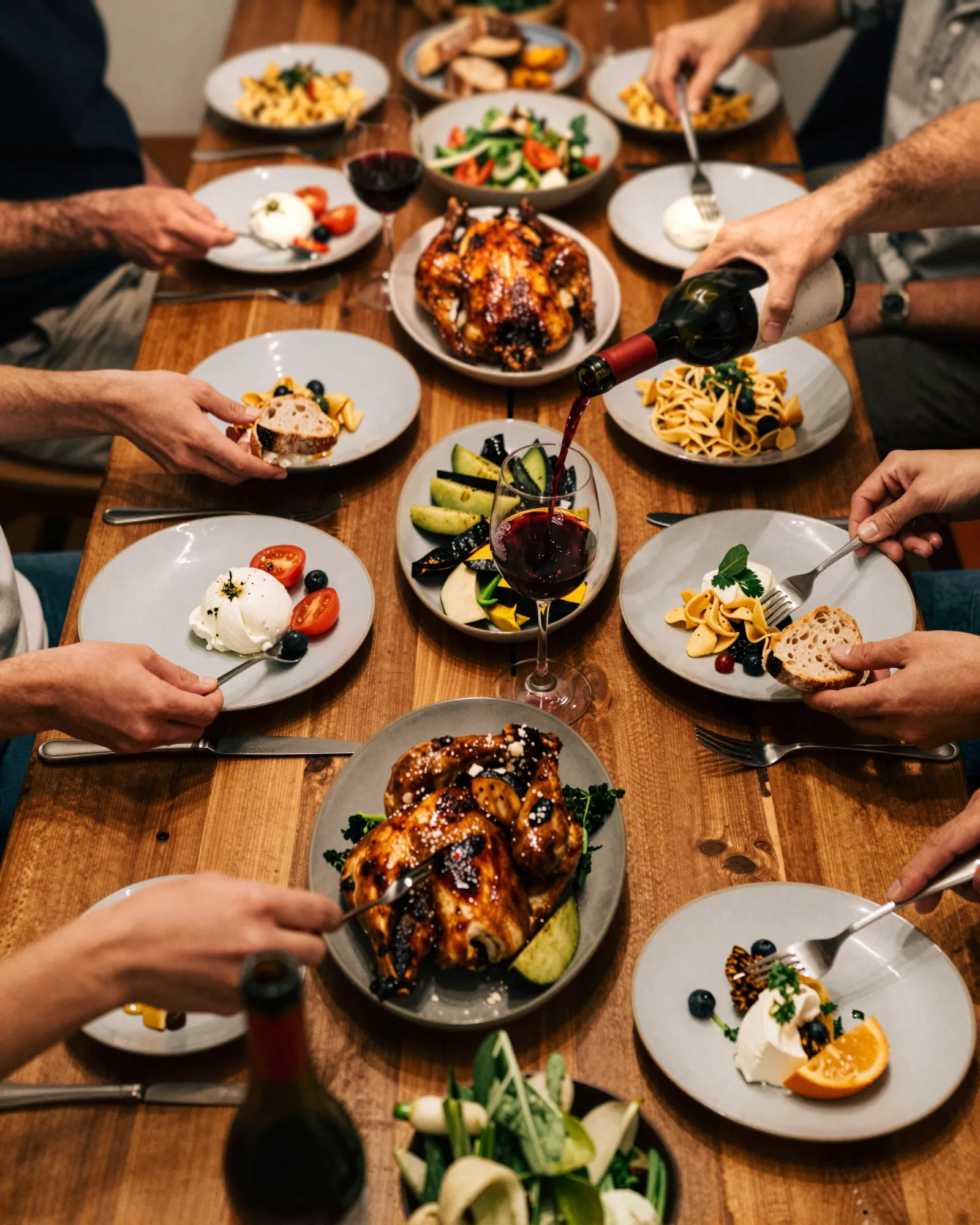
The nine major food allergens
The FDA lists nine major food allergens: milk, eggs, fish, crustacean shellfish, tree nuts, peanuts, wheat, soybeans, and sesame. The first eight come from the Food Allergen Labeling and Consumer Protection Act of 2004 (FALCPA). Sesame was added by the FASTER Act, signed on April 23, 2021, and the FDA’s labeling requirements applied to sesame from January 1, 2023.
That list is the backbone of any menu allergen list. It is not everything a guest can react to (mustard, celery, and sulfites bother some people too), but it is the set most guests with an allergy will ask about, and the set your staff should know dish by dish.
What federal rules cover, and what they do not
We are a menu software company, not lawyers, and this is not legal advice. With that said, here is what the FDA’s own pages say.
FALCPA is mainly about packaged food. The FDA says its labeling requirements extend to retail and food-service businesses that package, label, and offer products for sale, but do not apply to food placed in a wrapper or container, such as paper or a box for a sandwich, after a customer orders it. So a sandwich wrapped at the counter is treated differently from a grab-and-go salad you pack and label in the morning. If you sell labeled food from a case, read the FDA page and your local rules closely.
The FDA’s menu labeling rule is a separate thing and is about calories, not allergens. It covers restaurants and similar businesses in a chain of 20 or more locations operating under the same name with substantially the same menu. Those places must post calories on menus and menu boards and provide written nutrition information on request. The FDA’s menu labeling page does not set allergen requirements.
State and local rules: check yours
Food allergen menu requirements for independent restaurants mostly come from states, counties, and cities, and they differ. Some places require an allergy notice on the menu, some require a trained staff member on shift, some require a poster in the kitchen, and many require none of these. We have not listed them here because they change and we would rather you read the current rule than our summary of it.
Your health department is the place to ask. When you call or search, ask three things: does the menu need a printed allergy notice, and with what wording; does anyone on staff need allergen training; and does anything change for food you package ahead.
What to put on the menu
Whatever your local rules require, most guests with a food allergy need the same things from a menu: a way to spot the obvious risks, a warning about the hidden ones, and an invitation to ask.
- Name hidden allergens in the description. End the line with “Contains sesame.” or “Contains tree nuts.” Skip the obvious (“shrimp” in a shrimp dish).
- Print an allergy notice. Ask guests to tell their server about allergies before ordering. Say plainly that the kitchen handles the major allergens if it does.
- Keep a full allergen sheet for staff. Every dish against all nine allergens, kept by the pass and at the host stand, updated whenever a recipe changes.
| Allergen | Where it hides on a menu |
|---|---|
| Tree nuts | Pesto (pine nuts), romesco, praline, some granola, frangipane |
| Peanuts | Satay and some curry sauces, some fryer oils, dessert toppings |
| Sesame | Dressings, tahini and hummus, bun toppings, furikake |
| Fish | Fish sauce, Caesar dressing (anchovy), Worcestershire |
| Crustacean shellfish | Stocks, some XO and bisque bases, shared fryer oil |
| Milk | Butter finishes on steak and vegetables, some breads, whey in seasonings |
| Eggs | Aioli and mayonnaise sauces, egg wash on bread, fresh pasta |
| Wheat | Soy sauce, roux-thickened sauces, dredged proteins, beer batter |
| Soybeans | Soy sauce, miso, some oils and marinades |
Dietary tags are not allergen labels
“Vegan” and “gluten-free” are dietary tags. They help a guest scan the menu, and many menus print them as short marks with a key. But they are claims, and a guest with a serious allergy may rely on them. A gluten-free mark on fries cooked in the same oil as breaded chicken is a promise the kitchen is not keeping. Use a tag only if the kitchen can back it on a busy night, not just when the recipe is written.
“Nut-free” deserves extra care. If nuts are anywhere in the kitchen, many restaurants avoid the word and name the nuts that are in each dish instead.
What Gaslamp does and does not do for allergens
Gaslamp has dietary tags: vegetarian, vegan, gluten-free, dairy-free, nut-free, spicy, halal, and keto. It does not have an allergen system: no allergen icons, no filter, no matrix of dishes against the nine allergens. We would rather say that plainly than let a nut-free tag stand in for one.
The honest workaround uses two things Gaslamp does have:
- The description. End each dish with the allergens a guest would not guess. Descriptions are either empty or 10 to 300 characters, which leaves room.
- The disclaimers field. Each menu has a short fine-print field for notices such as “Please tell your server about any food allergy before ordering.” It shows on the hosted menu, but only two of the eight print designs include it on the PDF, so check the print preview before you count on it for paper.
When a recipe changes, edit the description from your phone and tap save. Phones that scan your QR code see the new wording about thirty seconds later, which beats a printed menu that still lists last month’s sauce. Printed copies still need a reprint, and the staff allergen sheet is still your job. For more on descriptions, see how to write menu descriptions, and for the whole menu, how to make a restaurant menu. The hosted menu itself is covered in digital menus.