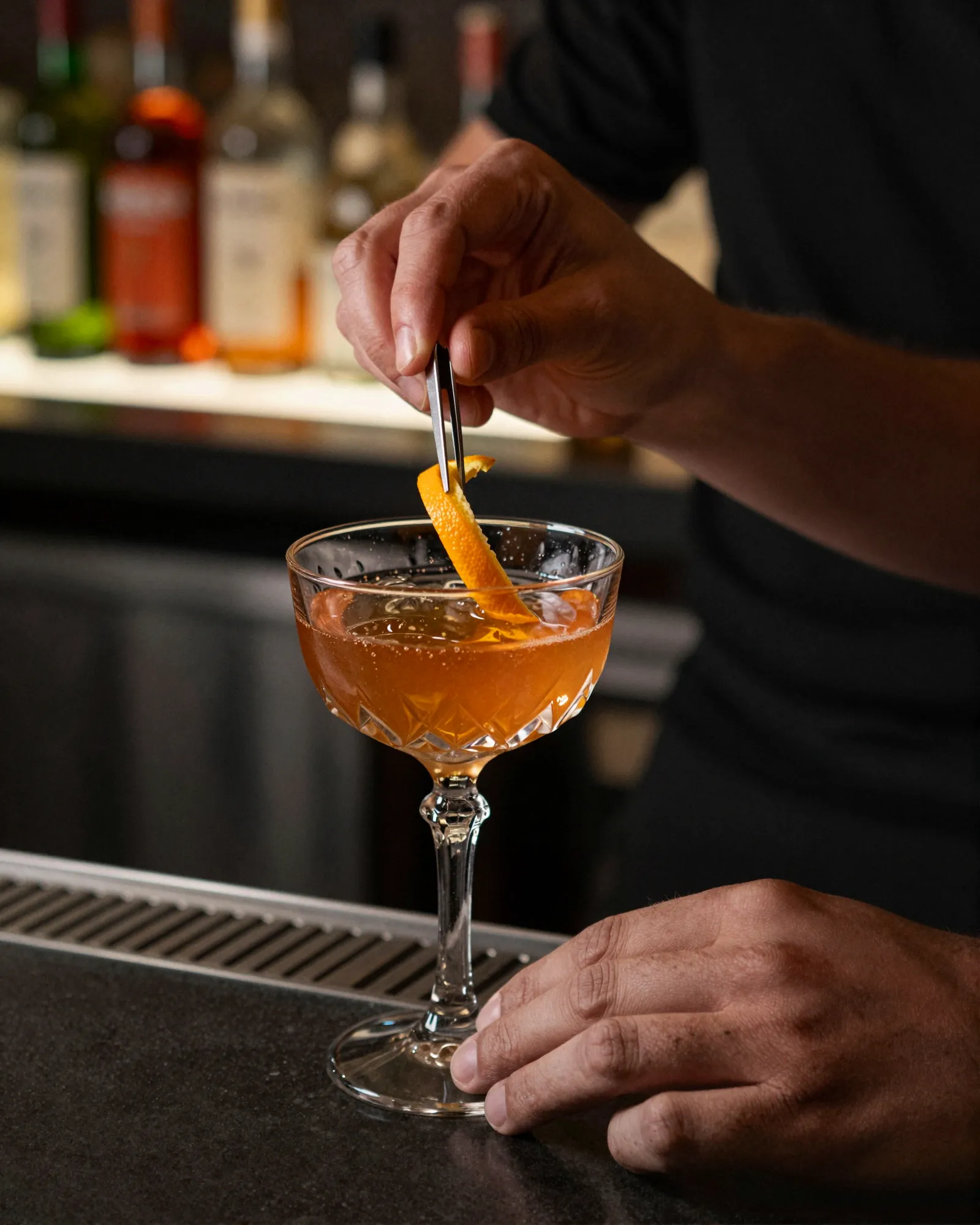
How many cocktails
The right number is set by the bar, not the menu. Count what your bartenders can make well during the busiest half hour of the week. Every house drink has its own syrups, juices, and garnishes to prep, and every one of them is a ticket the bartender has to remember at speed. Many bars land at eight to twelve house drinks and make classics on request without listing them all.
If the list keeps growing, look at what sells. A drink ordered twice a week is taking up a line and a quart of syrup. Cut it and bring it back as a special.
Put the list in one order
The order is what lets a guest find a drink without asking. Pick one scheme and hold to it across the whole list:
| Scheme | Sections, for example | Works best for |
|---|---|---|
| By style | Light and bright, Sours, Stirred and strong | Guests who know what they like but not the spirits |
| By base spirit | Gin, Agave, Whiskey, Rum | Regulars and spirit-focused bars |
| By strength | Low, Medium, Boozy | Long nights and early evenings |
| House, then classics | House cocktails, Classics, Zero proof | Short lists that lean on a few signatures |
Inside a section, lighter drinks first, stronger last, so the list reads the way the night goes. For a printed layout already set in that order, start from the cocktail menu template.
What each line says
A cocktail line has four parts: the name, the base spirit, the two or three ingredients that make the drink what it is, and the price. Put the spirit first, because it is the first thing a guest filters by. Leave out the bitters dash and the garnish unless they are the point.
- Name, then the spirit: “Garden Party · gin, cucumber, elderflower, lemon.”
- Say the style when the name does not: “stirred,” “on the rocks,” “up.”
- Name a producer only when it matters to the guest who orders it.
- Skip the mood: “refreshing,” “sophisticated,” and “perfect for any occasion” say nothing.
For more on trimming descriptions, see how to write menu descriptions.
Set the list for the room it is read in. A bar is dark, so a cocktail menu needs larger type than a dinner menu, one column rather than two, and prices lined up on the right where the eye finds them. On the phone the guest supplies the light, but the same rule holds: a short line per drink scans faster than a paragraph.
House drinks, classics, and zero proof
House drinks sell the bar. Classics reassure the guest who wants a Negroni and does not want to read. A zero-proof section, with names and prices as real as the rest, gives the table’s non-drinker a menu instead of a shrug. Three or four non-alcoholic drinks are enough to start; build them from the same syrups and juices already prepped for the house list.
Happy hour prices belong on their own list, with their own rules. That is its own guide: how to build a happy hour menu.
Pricing cocktails
Cost every drink by the ounce: each ingredient’s bottle price divided by the ounces in the bottle, times the pour, plus the syrup, juice, and garnish. That cost is your starting point, and the menu item price calculator turns it into a menu price at the cost percentage you run. Keep prices within a narrow band across the house list, and let a premium spirit carry a premium price on its own line.
When a bottle runs out, and when the list turns
A drink built on a single bottle, like an allocated bourbon or a mezcal you get twice a year, will run out mid-shift. Take it off the menu the moment it does, not at the end of the night. The same goes for seasonal fruit: the strawberry drink leaves when the strawberries do. Most bars rotate part of the list with the seasons and keep their three or four best sellers all year.
What Gaslamp does and does not do
In Gaslamp, the cocktail list can be its own menu with its own QR code for the bar top and a print-ready PDF, or a section on your main menu. Each drink takes up to three labeled prices, so a single and a double, or a house and a premium pour, share one line. Mark a drink sold out when the bottle runs out and the phone menu shows it struck through about thirty seconds after you save. A separate cocktail menu needs a paid plan; the trial includes one live menu.
Gaslamp does not track bottle inventory, calculate pour cost, or sync with your POS. How bars set up their menus, from the bar top code to the back bar, is on menus for cocktail bars, and wine gets its own format in how to organize a wine list.