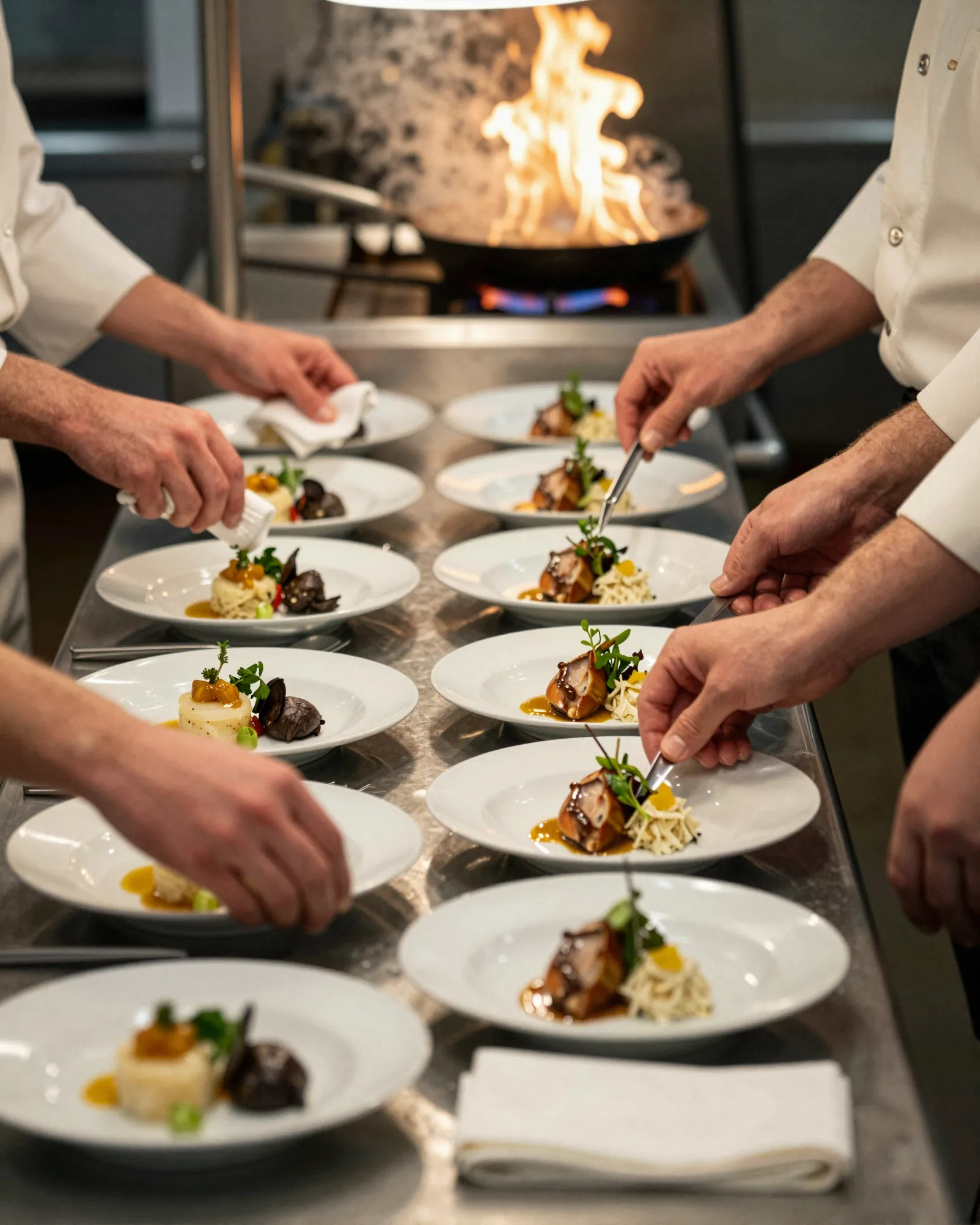
How kitchens use it
“86” works as a verb (“86 the short rib”), an adjective (“the short rib is 86”), and a list (“what’s on the 86 list?”). It is called from the kitchen the moment the last portion goes out, and every server needs to hear it before they take the next order.
- At lineup. The chef or manager reads out what is already 86 before doors: the dish that did not come in, the fish that sold out at lunch.
- During service. The kitchen calls it, and someone writes it on the 86 board by the pass or the POS terminal.
- In the POS. Most systems let you mark an item out of stock so servers cannot ring it in.
- At the bar. A drink is 86 when a bottle runs out. A guest is 86’d when they are cut off, and some bars keep a written 86 list of people they will not serve.
You will also hear it used loosely outside restaurants, for scrapping anything: “86 that idea.”
Where the word came from
Nobody knows for certain. The earliest known printed use is from 1933, when Walter Winchell listed it in his newspaper column on soda-fountain slang, where “86” meant “all out of it”. By the 1940s it was used for refusing service to a customer as well.
The explanation most word historians favor is rhyming slang for nix, meaning to say no or cancel. Soda fountains were full of number codes, and 86 fits the pattern. The better stories, mostly unprovable, include these:
- Chumley’s, 86 Bedford Street. The New York speakeasy’s back door was on Bedford Street, and patrons supposedly slipped out through it during raids. There is no record tying the address to the word.
- The 86th bowl. A Depression-era soup kitchen whose pot held 85 servings, so the 86th person went without. No source.
- Delmonico’s menu item 86. Supposedly the steak that always sold out. Nobody has produced evidence for it.
One magazine columnist summed up the research well: there are about 86 theories. Rhyming slang is the one with the most support.
The part that matters on a Friday night: the menu
Calling an 86 fixes the kitchen and the POS. It does nothing for the menu in the guest’s hand. The guest still reads the halibut, still wants the halibut, and hears “we’re out” from a server after they have already decided. That is the most avoidable disappointment in a dining room.
| Where the menu is | What 86 takes |
|---|---|
| Printed menu | Nothing you can do tonight. Servers tell each table. |
| Chalkboard or specials insert | Wipe it or pull the insert. Easy, if someone remembers. |
| PDF behind a QR code | Edit the file on a computer, export, re-upload. Nobody does this mid-service. |
| A hosted menu you edit from your phone | Switch the dish off and save. It is gone from the menu guests are scanning. |
How to 86 a dish in Gaslamp
- Open Gaslamp in your phone’s browser and pick the menu.
- Find the dish and tap Mark sold out (86 it). To take it off the menu entirely instead, switch it off; hidden dishes stay saved, they just stop showing.
- Tap Save & update live menu.
The menu behind your QR code rebuilds in about two seconds, and phones that scan it see the change about thirty seconds after you save. Mark it sold out and it stays on the phone menu, struck through with a “Sold out” label; switch it off and it disappears. Tomorrow, put it back on. Whole sections switch the same way, which is handy for a brunch menu on weekdays or a specials section that is not ready yet.
The printed menus on the table do not change, so the servers still need to hear the 86. What changes is that anyone scanning the code at the table, the bar, or the host stand reads the menu the kitchen can actually cook. More on running a menu that changes every service in restaurant menu management, or see how it works for cocktail bars, taprooms, and bakeries, where things run out the most.